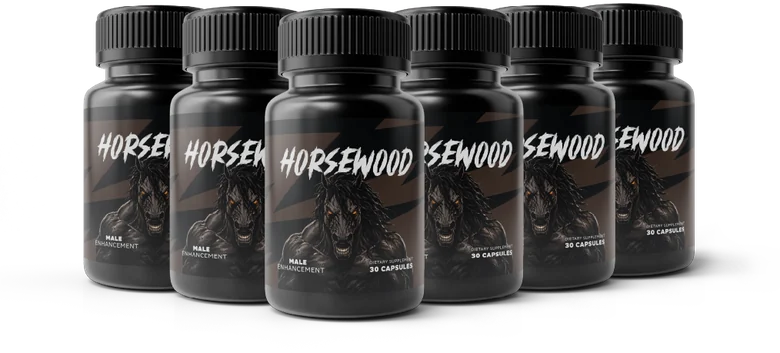
HorseWood Ingredients
HorseWood's seven botanicals carry meaningfully different levels of research support, from well-studied to purely traditional.
Eurycoma Longifolia, Epimedium and Boron are best-supported; Wild Yam's hormone claim does not hold up to scrutiny.
Seven ingredients, unevenly supported
Every ingredient is named on HorseWood's label. Cross-referencing each one against published research reveals meaningful differences in how well-supported each ingredient's specific role in this formula actually is.
All 7 ingredients, one by one
Eurycoma Longifolia (“1000mg equivalent”)
One of the more frequently studied botanicals in this category. Several small human trials report modest testosterone and libido improvements, though results are inconsistent across differing extract standardizations. The “equivalent” label language likely refers to a standardized-extract ratio rather than 1000mg of raw root; the exact ratio isn't disclosed.
Epimedium
Contains icariin, studied mainly in animal and laboratory research for blood flow. Traditional use for stamina is well documented; human clinical trials remain more limited than for Eurycoma Longifolia. HorseWood's label discloses the exact form used.
Saw Palmetto
Most studied for bladder comfort and urinary flow in aging men. A widely cited Cochrane systematic review found it performed no better than placebo for urinary symptom scores in several larger, rigorous trials. Best understood as a supporting ingredient for urinary comfort, not a primary vitality driver.
Wild Yam
Contains diosgenin, convertible to DHEA or progesterone only in a laboratory setting. The human body cannot perform that conversion. A legitimate traditional botanical, but the commonly attached hormone claim does not hold up to scrutiny.
Sarsaparilla
A long history of traditional use for general vitality and energy. Modern human clinical research specific to testosterone or male performance is minimal.
Nettle Leaf
Nettle root (a different plant part than leaf) has been studied for binding SHBG, theoretically freeing up more testosterone, alongside traditional bladder-comfort use. Labels sometimes blur the root/leaf distinction.
Boron Chelate
A trace mineral with some small human studies suggesting a modest increase in free testosterone and reduction in SHBG over weeks. One of the more interesting, if under-researched, ingredients in the formula.
The correction worth remembering
What to do with this information
See how HorseWood is positioned to work next.